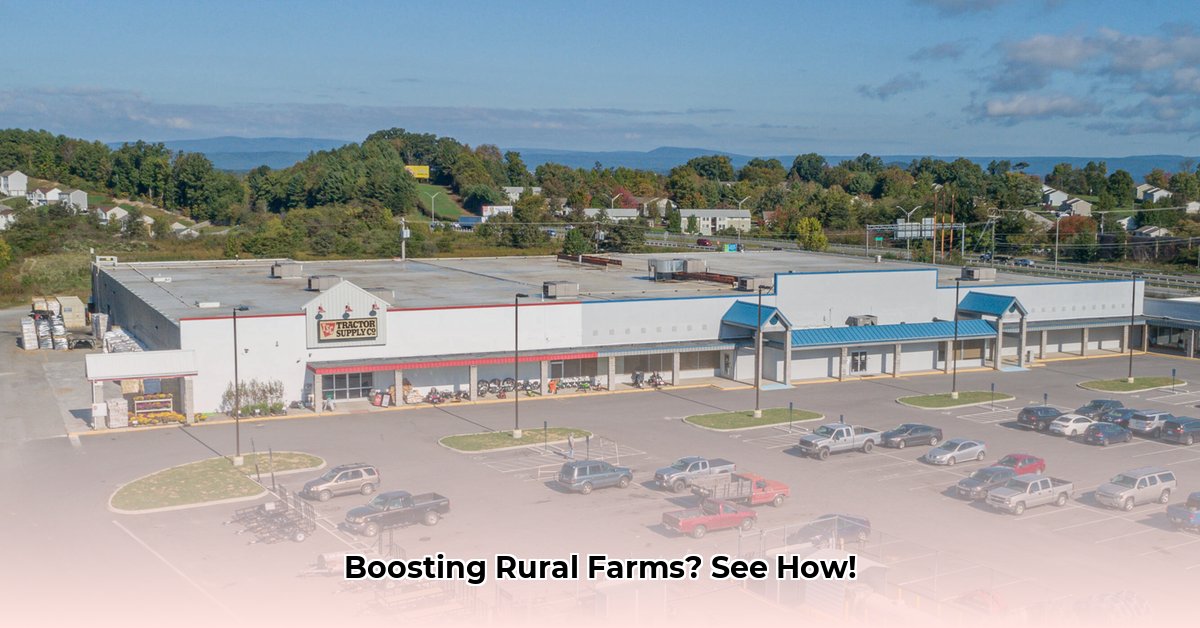
Christiansburg Tractor Supply (CTS) in Christiansburg, Virginia, serves as more than just a retail outlet; it functions as a vital hub for the local agricultural community, impacting farming practices, sustainable agriculture, and overall community development. This case study analyzes CTS's role, identifying both its contributions and areas for improvement in fostering a sustainable future for the region. How can this seemingly simple retail store impact the complex web of rural sustainability? The answer lies in its multifaceted engagement with the community and the potential for a more comprehensive approach. For similar examples of rural store impact, see this case study.
Assessing CTS's Impact on Rural Agriculture
CTS provides readily-accessible resources for farmers throughout the surrounding areas, including Radford, McCoy, and Blacksburg. Its convenient location near major roads and public transit ensures easy access for all, contributing significantly to the operational efficiency and productivity of local farms. This accessibility significantly supports the region's agricultural backbone. However, a complete understanding requires examining its sustainability profile. Does this crucial access to supplies come with unforeseen ecological consequences?
Sustainability Analysis: Opportunities and Challenges
CTS's positive influence on local farming is undeniable. It directly supports agricultural operations and the regional economy. However, a complete assessment necessitates a deeper dive into its sustainability practices.
Positive Impacts:
- Enhanced Accessibility: The strategic location of CTS minimizes downtime for farmers needing vital supplies, optimizing their operations.
- Community Hub Function: Beyond retail, CTS serves as a central meeting place and information exchange for area farmers, strengthening community bonds and collaboration.
Areas Requiring Improvement:
- Supply Chain Transparency: A lack of public information regarding the origin and production methods of CTS's goods limits the assessment of its environmental impact. Understanding the sustainability of its supply chain is crucial. Specifically, what are the carbon footprints associated with product sourcing and transportation?
- Environmental Footprint Assessment: Data on the store's energy consumption and waste generation is currently unavailable, hindering a comprehensive evaluation of its environmental responsibility. A formal sustainability audit is needed to generate baseline data. Precisely, what is the volume of energy used by the store and the amount of waste generated?
Strategic Recommendations for Sustainable Growth
To fully embrace sustainable agriculture, CTS and its stakeholders must implement actionable steps. The following framework outlines short-term and long-term goals:
Actionable Steps:
| Stakeholder | Short-Term Goals (Next Year) | Long-Term Vision (Next 3-5 Years) |
|---|---|---|
| Tractor Supply | Conduct a comprehensive sustainability audit; invest in energy-efficient technologies within the store. | Develop and implement a company-wide sustainability plan encompassing eco-friendly sourcing, waste reduction, and optimized logistics. |
| Local Farmers | Utilize store resources responsibly; adopt and promote sustainable farming practices. | Advocate for policies supporting sustainable agriculture and seek funding for innovative, eco-friendly farming approaches. |
| Local Government | Support infrastructure development for sustainable retail; provide incentives for environmentally friendly businesses. | Invest in improved public transport; foster collaboration between CTS and local sustainability initiatives. |
Building a Sustainable Future: A Collaborative Approach
CTS has the potential to exemplify how rural businesses can thrive while minimizing environmental impact. Transparency in supply chains, reduced environmental footprints, and active participation in sustainable initiatives are key to maximizing its positive contributions. Addressing the identified challenges and proactively implementing solutions is pivotal to achieving a truly sustainable future for Christiansburg and its agricultural community. Continued collaboration between CTS, local farmers, and governing bodies will be essential in navigating the complexities of implementing long-term sustainable practices. How can this collaborative spirit best be harnessed to build a truly thriving and sustainable community? The answer lies in sustained open communication and collective action.
Key Takeaways:
- CTS plays a crucial role in supporting local agriculture but needs to improve its transparency around its environmental impact.
- Collaborative efforts are necessary amongst stakeholders to advance sustainability within the community.
- A comprehensive sustainability plan including supply chain optimization and energy efficiency upgrades is crucial for long-term success.